
The Grid's Three Body Problem
Reliability, cost, and emissions - our priorities are always in conflict

Introduction
In one of my solar posts, I described a scenario where a less reliable resource (solar) was allowed and even incentivized to push out a more reliable one (gas).
With reliability being top of mind right now, this can come as a bit of a head scratcher. But by the end of this article, you’ll start to see why things play out this way.
Hint: It’s because of tradeoffs and competing priorities.
Why a Less Reliable Resource is Beating a More Reliable One
We’ll go back to my previous example. Here’s a refresher:
Solar is driving down daytime energy prices
This makes project developers less likely to develop gas plants
Put simply, a less reliable resource is pushing out a more reliable one
Why is this happening? The answer is cost.
It’s not just a less reliable resource pushing out a more reliable one
It’s a less reliable, cheaper resource pushing out a more reliable, more expensive one
When resources are equally reliable, and one is cheaper, the choice is easy. That’s why gas beat coal.
But when costs and reliability differ, the choice becomes less obvious.
Add emissions into the mix and decisions become much harder to make.
The Three Priorities Behind Every Grid Decision
Most energy tradeoffs revolve around three priorities:
1. Reliability
2. Cost
3. Emissions
It should be obvious that these priorities are competing.
Cleaner power may be less reliable. Reliable power may produce emissions. The list goes on.
Generally, people prioritize in the following way:
Reliability > Cost > Emissions
Cost and emissions are sometimes interchangeable, but reliability always comes first.
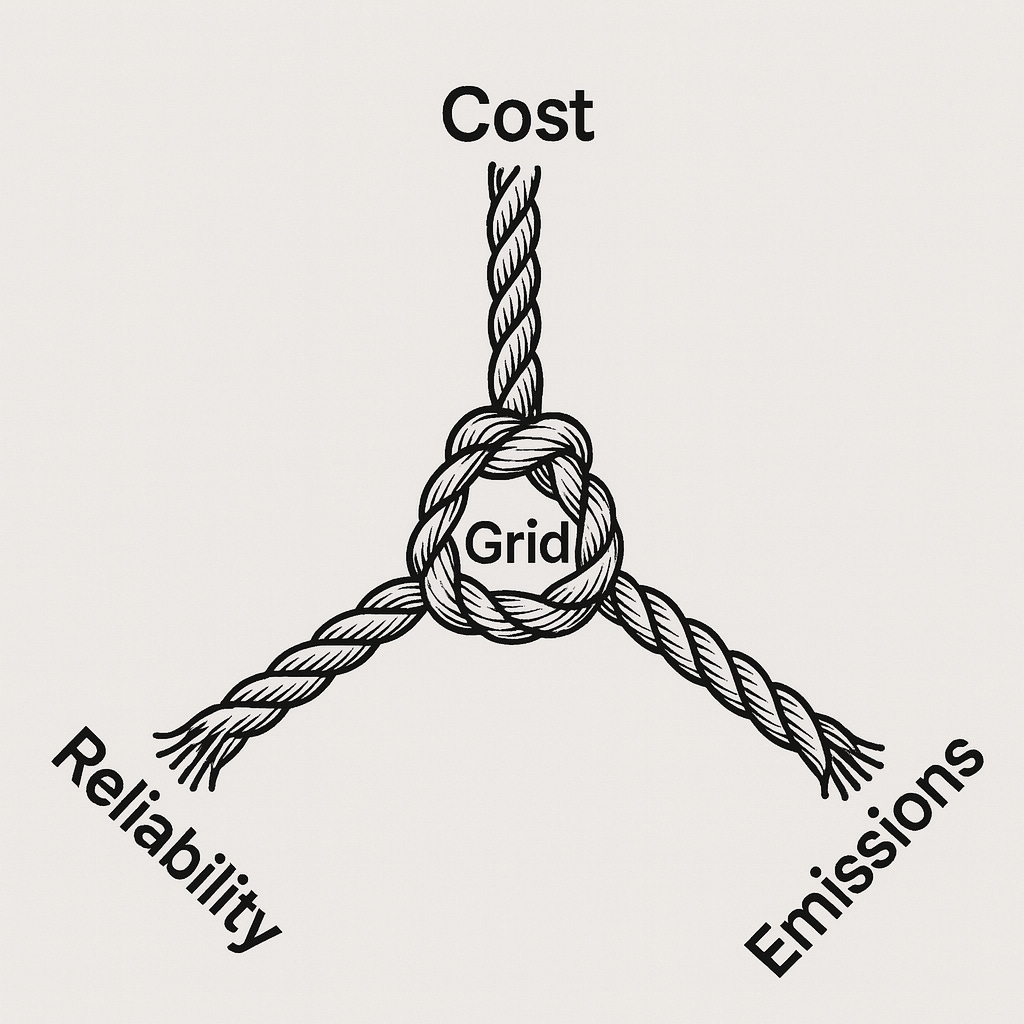
Why People Disagree on What the Grid Should Look Like
Everyone agrees we want a grid that’s reliable, affordable, and clean. The disagreement lies in how we rank those priorities, and which tradeoffs we’re willing to accept.
Some will always prioritize reliability, even if it means higher costs or more emissions. Others are willing to tolerate reliability risks or higher prices for decarbonization.
Once you see the grid through this lens - three competing priorities, each weighted differently - it becomes a lot easier to understand where people are coming from.